


# The Complete Guide to Propane Delivery Route Optimization Software for 2026
> TL;DR: Propane delivery route optimization software reduces fuel costs by 20-30% and eliminates 2-3 hours of daily manual planning for distribution operations. Heavy propane trucks consuming 6-8 MPG combined with complex DOT compliance requirements make manual routing extremely costly. Route optimization tools like Zeo Route Planner address this with AI-powered route optimization and capacity-based routing, helping propane delivery teams save 2+ hours daily.
Managing propane delivery routes manually costs your operation thousands of dollars monthly in wasted fuel, overtime pay, and missed delivery windows. With propane trucks consuming 6-8 miles per gallon and driver wages averaging $22 per hour according to the Bureau of Labor Statistics, inefficient routing directly impacts your bottom line.
Propane distribution companies face unique challenges that standard delivery operations don’t encounter. Your drivers transport hazardous materials requiring DOT compliance documentation. Emergency deliveries interrupt scheduled routes. Heavy trucks need optimized paths to reduce fuel consumption.
The right propane delivery route optimization software addresses these specific challenges while delivering measurable cost savings of 20-30% for most operations.
Why Standard Route Planning Fails for Propane Delivery Operations
Manual route planning creates cascading problems for propane distributors. Most operations managers spend 2-3 hours each morning planning routes using spreadsheets or basic mapping tools that don’t account for propane delivery complexities.
These manual methods ignore vehicle capacity limits for different propane tank sizes. A truck might handle 50 residential 20-pound tanks or 8 commercial 100-pound cylinders, but generic routing software doesn’t calculate these constraints.
Emergency deliveries destroy carefully planned routes. When a restaurant runs out of propane during lunch rush, dispatchers scramble to find the nearest driver. This reactive approach sends drivers across town, adding 30-45 minutes to their day and delaying other scheduled deliveries.
Standard routing also fails to consider DOT requirements for hazmat transport. Drivers need specific route documentation, vehicle inspection records, and delivery confirmation for compliance. Manual tracking leaves gaps that create liability risks during DOT audits.
The cumulative effect hits your operational costs hard. According to the National Propane Gas Association, distribution companies using manual routing typically see 25-35% longer routes than necessary, directly translating to higher fuel costs and overtime pay.
Essential Features Every Propane Route Optimization Software Must Have
Propane delivery operations require specialized routing capabilities that generic software can’t provide. Look for these critical features when evaluating solutions.
Capacity-based routing handles multiple propane container types automatically. The software should calculate how many 20-pound, 30-pound, and 100-pound tanks fit in each truck while considering weight and space limitations. This prevents overloading and ensures efficient truck utilization.
Time window management accommodates customer preferences and business requirements. Commercial customers often need deliveries during specific hours to avoid disrupting operations. Residential customers may request morning or afternoon windows. The software should optimize routes while respecting these constraints.
Priority delivery handling manages emergency requests without destroying existing routes. When urgent deliveries arise, the system should identify the closest available driver and adjust their route automatically, minimizing disruption to other scheduled stops.
Real-time GPS tracking and communication keeps dispatchers informed about driver locations and delivery progress. This visibility enables better customer service and helps coordinate emergency deliveries more effectively.
Zeo Route Planner includes all these features specifically designed for delivery operations. The platform’s AI-powered route optimization automatically calculates propane tank loads while its priority stop feature handles emergency deliveries seamlessly.
ROI Calculator: Quantifying Fuel and Labor Savings for Propane Companies
Route optimization delivers measurable savings that justify software investment within months. Here’s how to calculate your potential return on investment.
Fuel savings provide the most immediate impact. Propane delivery trucks average 6-8 MPG depending on load and route conditions. Route optimization typically reduces daily mileage by 20-25% through better stop sequencing and elimination of backtracking.
Calculate your baseline: If your operation runs 10 trucks driving 150 miles daily at 7 MPG with diesel at $3.50 per gallon, you spend $750 daily on fuel. A 22% reduction saves $165 per day or $3,465 monthly.
Labor cost reductions come from shorter routes and better time management. Drivers completing routes 45-60 minutes faster reduces overtime while enabling more deliveries per day. With average driver wages at $22 per hour, saving one hour daily per driver generates $220 in labor savings for a 10-driver operation.
Vehicle maintenance savings result from reduced mileage and engine hours. Every 1,000 miles eliminated saves approximately $50 in maintenance costs for commercial trucks, according to the American Transportation Research Institute.
Combined, these savings often reach $4,000-6,000 monthly for operations managing 10-15 trucks. Most route optimization software costs $30-50 per driver monthly, creating ROI within 60-90 days. Learn more about how to reduce last-mile delivery costs for your operation.
Handling Emergency Deliveries Without Disrupting Scheduled Routes
Emergency propane deliveries test your operation’s efficiency and customer service capabilities. Restaurant equipment failures, heating emergencies, and forklift breakdowns create urgent requests that demand immediate response.
Traditional dispatch methods disrupt entire route schedules. Dispatchers typically call drivers individually to find who’s closest to the emergency location. This manual process wastes 10-15 minutes while customers wait, and often sends drivers significant distances from their planned routes.
Smart routing software handles emergencies systematically. The system identifies which driver can reach the emergency fastest while considering their current location, remaining deliveries, and vehicle capacity. It automatically recalculates affected routes to minimize total disruption.
Priority delivery features enable immediate route adjustments. When emergencies arise, dispatchers mark them as ASAP priority. The software determines optimal insertion points in existing routes and notifies affected customers about revised delivery windows.
Zeo’s dynamic route adjustment capability handles mid-shift changes automatically. The AI-powered optimization saves 2+ hours daily per driver by preventing the manual recalculation typically required when emergencies disrupt schedules.
Communication becomes critical during route changes. Drivers need instant notifications about new stops, revised sequences, and customer updates. Automated customer notifications maintain service quality by informing clients about delivery time adjustments.
Mobile Driver Features That Matter for Propane Delivery Teams
Your propane delivery drivers need mobile tools that work efficiently in the field while maintaining safety and compliance standards. The right mobile features reduce administrative burden and improve delivery accuracy.
Optimize routes with our algorithm, reducing travel time and costs efficiently.
increase fuel savings
Save $200 on fuel, Monthly!
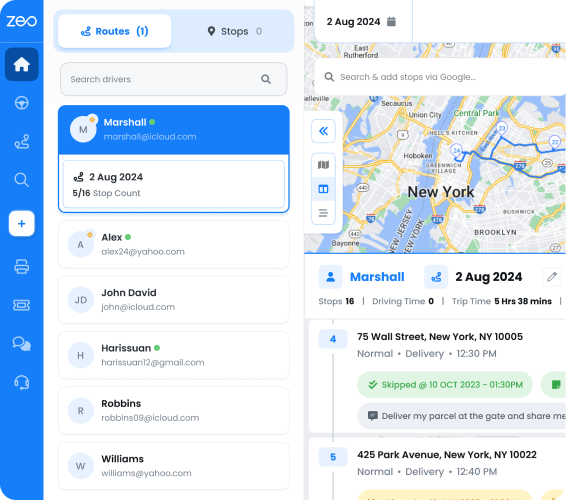
Route delivery through mobile apps eliminates paper-based routing. Drivers receive optimized routes directly on their phones via apps like Zeo, complete with turn-by-turn navigation and customer details. This ensures they follow the most efficient sequence without needing to interpret printed directions.
Digital proof of delivery streamlines documentation requirements. Drivers capture customer signatures, photos of delivered tanks, and delivery notes directly in the mobile app. This creates instant delivery confirmation that integrates with billing systems and compliance records.
Real-time status updates keep dispatchers informed about route progress. Drivers mark deliveries complete, report issues, or request assistance through the mobile interface. These updates enable better customer service and help coordinate any necessary route adjustments.
Navigation integration works with drivers’ preferred mapping apps. Whether they prefer Google Maps, Waze, or Apple Maps, the route optimization software should export seamlessly to their chosen navigation platform.
Communication features enable instant contact between drivers and dispatch. When drivers encounter delivery issues, road closures, or safety concerns, they need immediate access to support without complicated phone trees or radio protocols.
Tank tracking capabilities help drivers manage inventory throughout their routes. The mobile app should track how many tanks of each size remain on the truck, alerting drivers when they’re running low and need to return for additional inventory.
Compliance and Safety: Route Planning for Hazardous Material Transport
Propane delivery operations must maintain strict DOT compliance for hazardous material transport. Route planning software should support these regulatory requirements while improving operational efficiency.
Route documentation satisfies DOT inspection requirements. Drivers need written routing instructions, emergency contact information, and hazmat placarding verification. Digital systems provide consistent documentation that’s easily accessible during inspections.
Delivery confirmation records support compliance reporting and customer billing accuracy. Each delivery requires documentation of tank sizes, quantities, delivery locations, and customer acknowledgment. Digital proof of delivery creates immediately accessible records.
Zeo’s photo capture and delivery notes features help drivers document compliance requirements. The system maintains organized delivery records that satisfy DOT documentation standards while streamlining administrative processes.
Driver qualification tracking ensures only certified personnel handle hazmat deliveries. Route planning software should verify that assigned drivers maintain current CDL endorsements and hazmat certifications before dispatching loads.
Vehicle inspection integration connects daily safety checks with route assignments. Drivers complete required pre-trip inspections through the mobile app, creating documentation that supports DOT compliance while ensuring vehicle safety.
Emergency response planning becomes more manageable with GPS tracking and communication features. Dispatchers know exactly where each hazmat load is located and can coordinate emergency response if incidents occur.
Safety routing considerations include avoiding residential areas where possible, minimizing urban congestion exposure, and planning routes that provide easy access to emergency services. Advanced routing software incorporates these factors automatically while optimizing efficiency.
Frequently Asked Questions
Q: What are the DOT compliance requirements for propane delivery routing?
Propane delivery operations must maintain DOT hazmat documentation including route plans, driver certifications, and vehicle inspection records. Digital route optimization systems help document these requirements automatically while ensuring drivers follow approved hazmat routes.
Q: How much fuel can route optimization save for propane delivery trucks?
Propane delivery trucks averaging 6-8 MPG can reduce fuel costs by 20-25% through optimized routing that eliminates backtracking and reduces daily mileage. For a 10-truck operation, this typically saves $3,000-4,000 monthly in fuel expenses alone.
Q: Can route planning software handle emergency propane deliveries?
Yes, advanced systems like Zeo Route Planner use priority stop features and dynamic route adjustment to insert emergency deliveries without disrupting entire schedules. The AI-powered optimization saves 2+ hours daily by automatically recalculating affected routes and notifying customers of revised delivery windows.
Q: What mobile features do propane delivery drivers need most?
Drivers need digital proof of delivery with photo capture, signature collection, and delivery notes to document tank deliveries and maintain compliance records. Real-time GPS tracking and instant communication with dispatchers are also essential for coordinating emergency deliveries and route changes.
Q: How do you calculate ROI for propane delivery route optimization software?
Calculate baseline costs (fuel, labor, maintenance) then apply typical savings: 20-25% fuel reduction, 45-60 minutes shorter routes, and reduced vehicle wear. Most operations with 10+ trucks see $4,000-6,000 monthly savings, creating ROI within 60-90 days since route optimization software typically costs $30-50 per driver monthly.
Ready to reduce your propane delivery costs by 20-30%? Start your free trial of Zeo Route Planner to see how specialized routing software transforms your operation’s efficiency and profitability.
Are you a fleet owner?
Want to manage your drivers and deliveries easily?
Grow your business effortlessly with Zeo Routes Planner – optimize routes and manage multiple drivers with ease.
increase fuel savings
Save $200 on fuel, Monthly!
Optimize routes with our algorithm, reducing travel time and costs efficiently.
Get Started for Free